Morley's Final Catalogue: Not listed. Nepticulids were not well studied and only 21 species listed..
Recent Status: One of the commoner Nepticulids in Suffolk
Life Style: A single brooded species. The moth flies during May to July and comes to light. The larvae mine leaves of Castanea sativa, Quercus robor and Q. petraea. They hibernate in a cocoon on the ground.
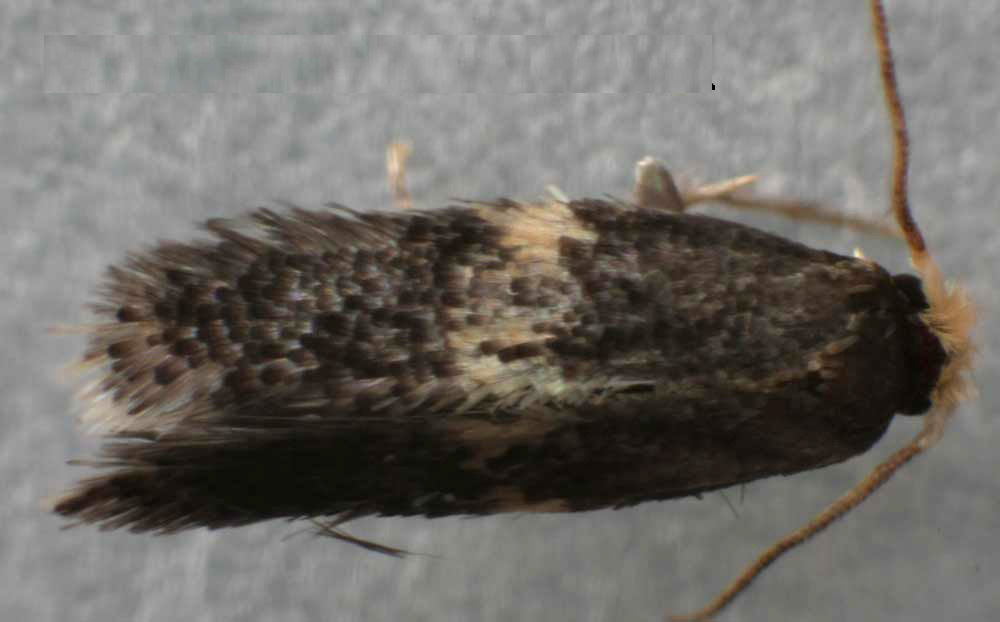
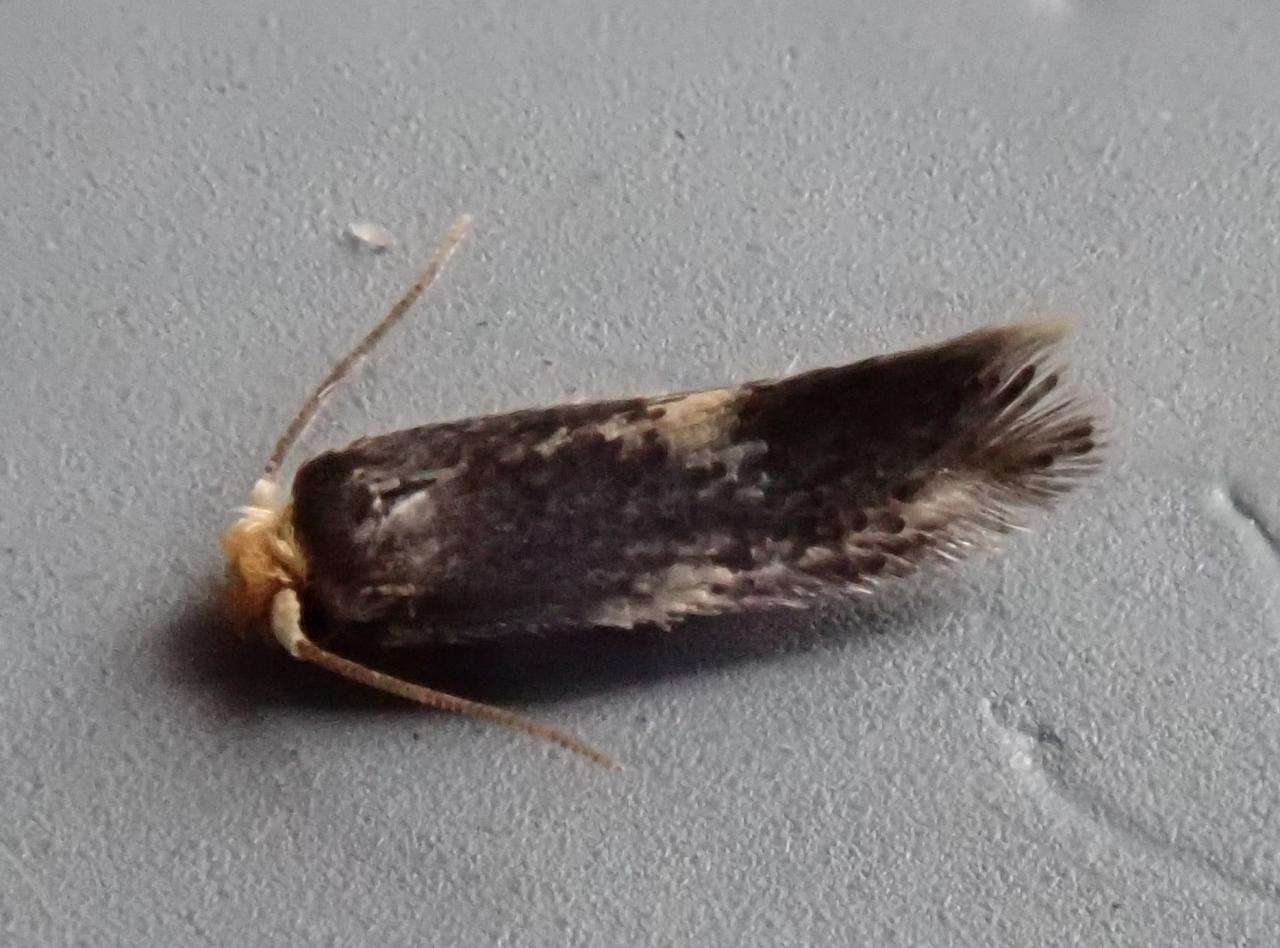
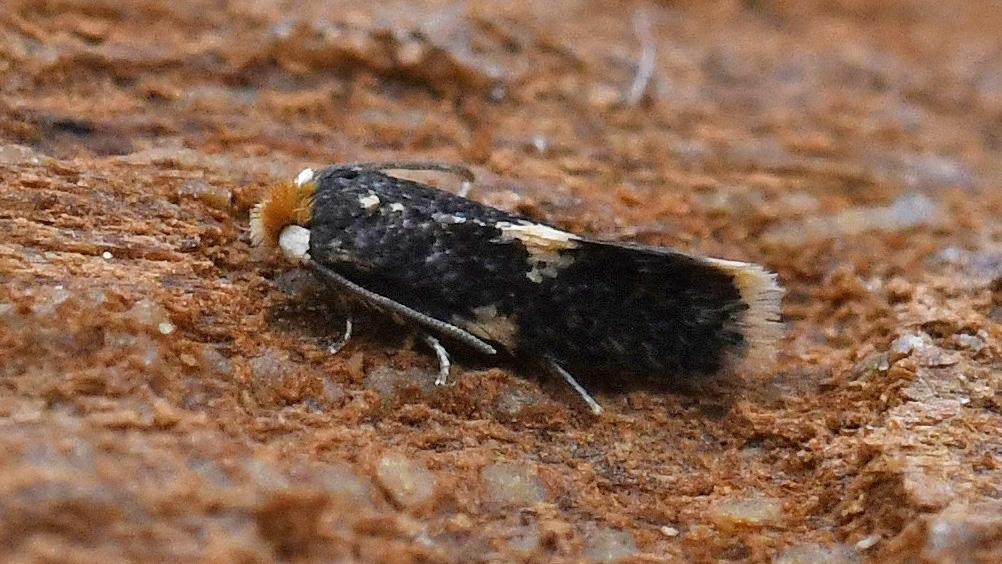
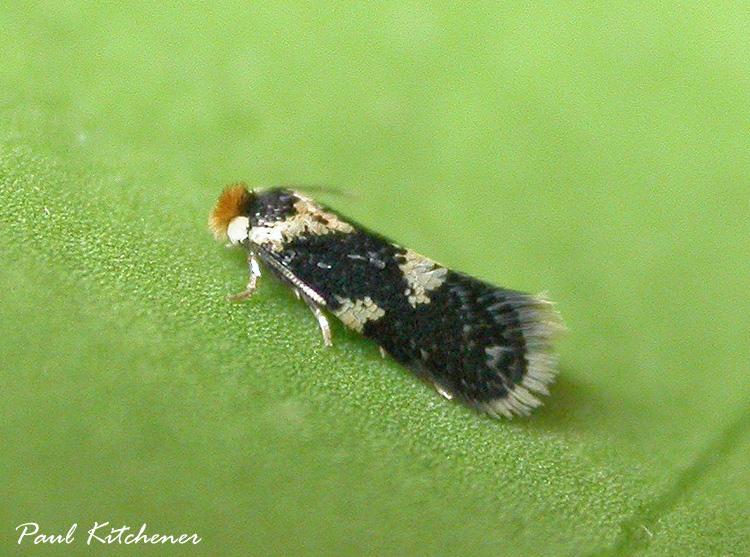
Identification: The adult moth has an orange or dirty cream head tuft. The wings are glossy black. The scape, cilia and two opposing spots on the costa and dorsum are white or cream. The spots almost join. There is some variability and melanic forms exist. The moth can be identified by breeding out from a mine or by genitalia dissection. The larva creates a narrow gallery from the oviposition site next to a vein on the upper side of a leaf. The gallery follows a vein before widening to a squarish blotch with the frass left loosely away from the feeding larva. The larvae show a green gut. More Info
Determination by Genitalia Examination (gen. det.) Required
Mine: Either the leaf or a good photograph required
Recorded in 51 (88%) of 58 10k Squares. First Recorded in 1985. Last Recorded in 2025. Additional Stats
This site requires necessary cookies to function correctly. We'd also like to set Google analytics cookies that help us make improvements by measuring how you use the site. These will be set only if you accept all cookies.
Necessary cookies enable core functionality such as security, network management, and accessibility. You may disable these by changing your browser settings, but this will affect how the website functions.
Cookies Policy